

The after effects of a panic attack include exhaustion, soreness, headache, shakiness, and brain fog. These fade within hours to a few days. The National Institute of Mental Health (NIMH) says the physical symptoms of an attack usually resolve with time. Many people call this recovery a panic attack hangover. This guide covers what causes it, how long it lasts, and what helps.
Key Takeaways
- Common after effects are fatigue, body aches, headache, shaking, brain fog, and an on-edge feeling.
- Adrenaline, the stress hormone behind the attack, drives a fast heartbeat and fast breathing, and the body then needs time to settle.
- Rest, water, regular meals, gentle movement, and slow breathing help the body reset.
- Chest pain, trouble breathing, or fainting need emergency care, not home recovery.
- After effects that last longer than a few days, or repeated attacks, call for an evaluation.
What Are the After Effects of a Panic Attack?
The after effects of a panic attack are the physical and emotional symptoms that linger once the fear peak passes. NIMH lists a pounding heart, chills, trembling, dizziness, tingly hands, and stomach pain among the symptoms during an attack. Many of the same signals fade slowly afterward.
Fatigue, aching muscles, headache, and a foggy mind are the usual leftovers. Emotional leftovers include irritability, tearfulness, and worry about another attack. Patients with repeated attacks can get recurring panic care that targets both the attacks and the aftermath.
Why Does Your Body Feel Wrecked After a Panic Attack?
Your body feels wrecked because a panic attack sets off the fight-or-flight alarm and burns through energy in minutes. Harvard Health explains that the adrenal glands release epinephrine, also called adrenaline. The hormone speeds the heart, raises pulse and blood pressure, and quickens breathing. The muscles tense for action that never comes.
Once the alarm ends, adrenaline levels drop and the body is left drained. Some people call this an adrenaline hangover, because the crash resembles the tired, achy morning after a bad night. The body during panic follows this same pattern each time.
Why Am I Tired After a Panic Attack?
You feel tired after a panic attack because the stress response uses energy fast and leaves the nervous system worn out. Fast breathing, a racing heart, and tense muscles act like a sprint you did not choose. Sleepiness arrives once the adrenaline drops.
Poor sleep before or after the attack adds to the exhaustion. The National Heart, Lung, and Blood Institute (NHLBI) says adults need 7 to 8 hours of sleep a day. The table below shows the common after effects, the reason behind each, and how they usually show up.
| After effect | Why it happens | What it feels like |
|---|---|---|
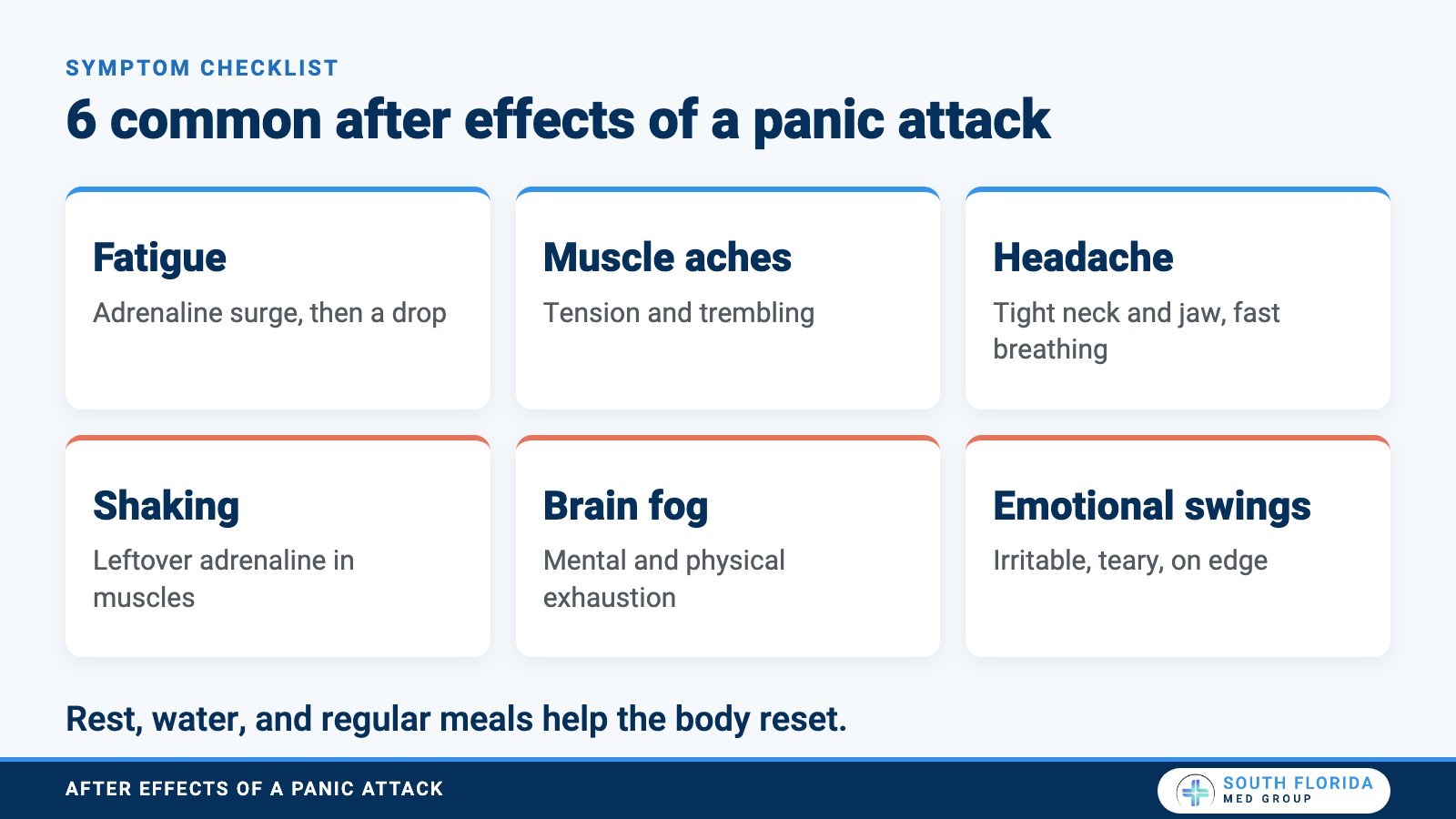
| Fatigue | Adrenaline surge, then a drop | Heavy, drained, sleepy |
| Muscle soreness | Tension and trembling during the attack | Aching limbs, neck, back, or jaw |
| Headache | Tight neck and jaw muscles, fast breathing | Dull pressure or tension band |
| Shaking | Leftover adrenaline in the muscles | Trembling hands or legs |
| Brain fog | Mental and physical exhaustion | Slow thinking, poor focus |
| Emotional swings | Fear still settling, worry about a repeat | Irritable, teary, on edge |
The pattern is the same across the table: a short, intense surge, then a slow return to baseline. The next sections explain each effect in turn, starting with head pain.
Why Do You Get a Headache After a Panic Attack?
A headache after a panic attack comes from tight muscles in the neck, shoulders, and jaw plus fast breathing. Clenching and tensing during the attack strains these muscles. Hyperventilation, meaning breathing faster than the body needs, can also leave you lightheaded.
A headache after a panic attack usually feels like dull pressure rather than a sharp stab. Water, rest, and a warm compress on the neck help many people. A sudden severe headache, vision change, weakness, or one-sided numbness needs emergency care. Call 911 or go to the nearest emergency room.
Why Do I Shake After a Panic Attack?
You shake after a panic attack because adrenaline still circulates and the muscles keep firing. NIMH lists trembling as a core symptom of an attack. Shaking after a panic attack fades as the hormone clears and the muscles relax.
Sitting down, sipping water, and breathing slowly shorten the shakes. Caffeine can restart them. The FDA cites 400 milligrams daily, about two to three 12-ounce cups of coffee, as not generally associated with negative effects. Skipping coffee right after an attack gives the nerves a break, and clear thinking returns next.
Can You Have Brain Fog After a Panic Attack?
Yes, brain fog after panic attack episodes is common, and it clears as the body recovers. The mind spends its resources on threat detection during the attack, so focus, memory, and word-finding feel dull afterward. Poor sleep makes the haze last longer.
Simple tasks, short breaks, and regular meals help the mind catch up. Postpone big decisions, tests, and tricky emails until the haze lifts. Emotional effects follow the mental ones, which leads to the next question.
Why Do I Cry After a Panic Attack?
You cry after a panic attack because the fear surge releases a flood of tension that needs somewhere to go. Tears, irritability, shame, and a low mood are common feelings after a panic attack. The body is relieved and drained at the same moment.
Crying is not a sign of weakness. NIMH notes that the fear of future attacks may lead to ongoing anxiety, so some people feel jumpy for hours. Kind self-talk and a calm space help, and one more mental effect deserves its own answer.
What Is Derealization After a Panic Attack?
Derealization is a feeling that the world looks unreal, distant, or dreamlike, and it can follow a panic attack. Depersonalization is the matching feeling of being detached from your own body or thoughts. Both are the brain's way of dampening an overwhelming alarm.
Both sensations usually fade as the nervous system calms. Grounding helps: name five objects you see, four you can touch, and three you hear. Persistent detachment lasting days is a reason to book a diagnostic assessment, and timing is the next question.
How Long Do the After Effects of a Panic Attack Last?
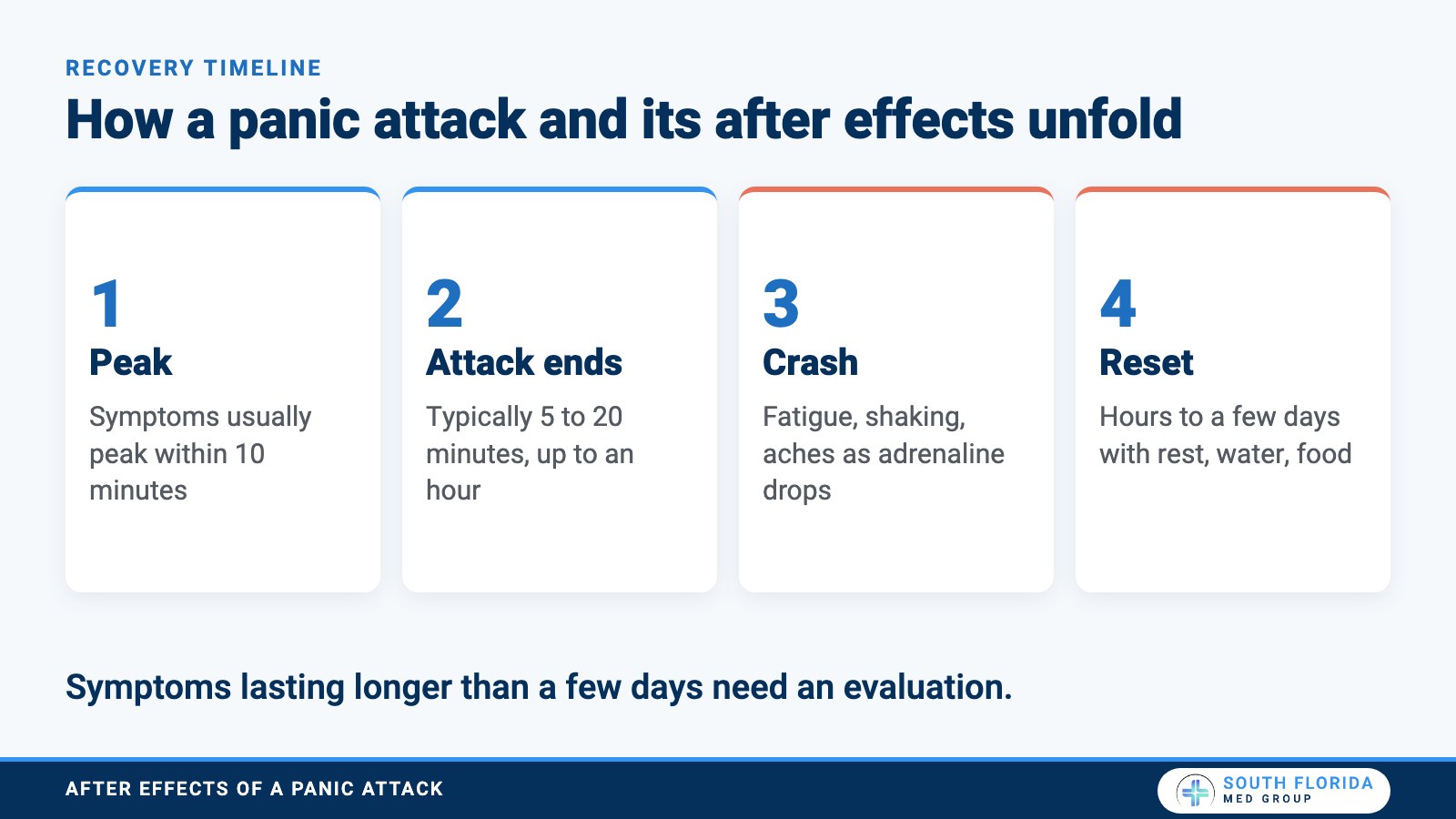
The after effects of a panic attack last from several hours to a few days. The attack itself is shorter. The National Health Service (NHS) says panic attacks typically last 5 to 20 minutes, and some reach an hour. Cleveland Clinic reports that symptoms usually peak within 10 minutes.
Simply Psychology, a consumer health site, puts hangover-style symptoms at anywhere from 10 minutes to a week. Severe attacks, poor sleep, and repeated attacks stretch the recovery. A closer look at the panic attack timeline explains what shifts the timeline, and recovery steps come next.
How Do You Recover After a Panic Attack?
Recover after a panic attack by resting in a quiet place, breathing slowly, and giving the body water and food. NIMH advises regular exercise, healthy meals, a sleep routine, and less caffeine for stress. The same habits support how to recover after a panic attack.
Follow these steps in order.
- Sit or lie down somewhere calm and dim the lights.
- Breathe in through the nose for 4 counts and out for 6 counts.
- Drink a glass of water.
- Eat a small meal with protein and complex carbohydrates.
- Stretch or walk gently for 10 minutes once the shaking stops.
- Note what happened in a journal, without judging yourself.
- Go to bed at a regular time.
Slow breathing and grounding calm the nervous system. A calm down afterward routine ties these steps together, and food choices matter next. The graphic below lists six common after effects at a glance.
What Should You Eat or Drink After a Panic Attack?
After a panic attack, drink water and eat a small balanced meal with protein, whole grains, fruit, or vegetables. Steady blood sugar prevents a second wave of shakiness and fatigue. What to eat after a panic attack matters less than eating something regular.
Warm herbal tea and broth are gentle on the stomach. Limit coffee, energy drinks, and alcohol, which can raise jitters and disrupt sleep. Food refuels the body, and sleep finishes the job.
Can You Sleep After a Panic Attack?
Yes, you can sleep after a panic attack, and sleep supports recovery. NHLBI says adults need 7 to 8 hours of sleep a day. A short nap of 20 to 30 minutes can help when exhaustion hits during the day.
Trouble sleeping after a panic attack is common because adrenaline lingers. Dim the lights, skip screens, and keep the room cool. NIMH recommends a steady sleep routine for stress. Attacks that wake you from sleep deserve their own look, and the next question covers when after effects point elsewhere.
When Do After Effects Mean Something Else?
After effects point to something else when chest pain, trouble breathing, or fainting appears. NIMH notes that panic symptoms can feel like a heart attack. Cleveland Clinic advises emergency care for chest pain, trouble breathing, or loss of consciousness.
Call 911 or go to the nearest emergency room for these signs. Thyroid disease, heart rhythm problems, low blood sugar, and asthma can mimic panic. A medical check-up rules these out, and the table below shows when to act.
| Sign | Usually points to | Next step |
|---|---|---|
| Tiredness, aches, fog for hours | Normal recovery | Rest, water, food |
| After effects lasting more than a few days | Possible panic disorder or another condition | Book an evaluation |
| Repeated attacks | Possible panic disorder | Book an evaluation |
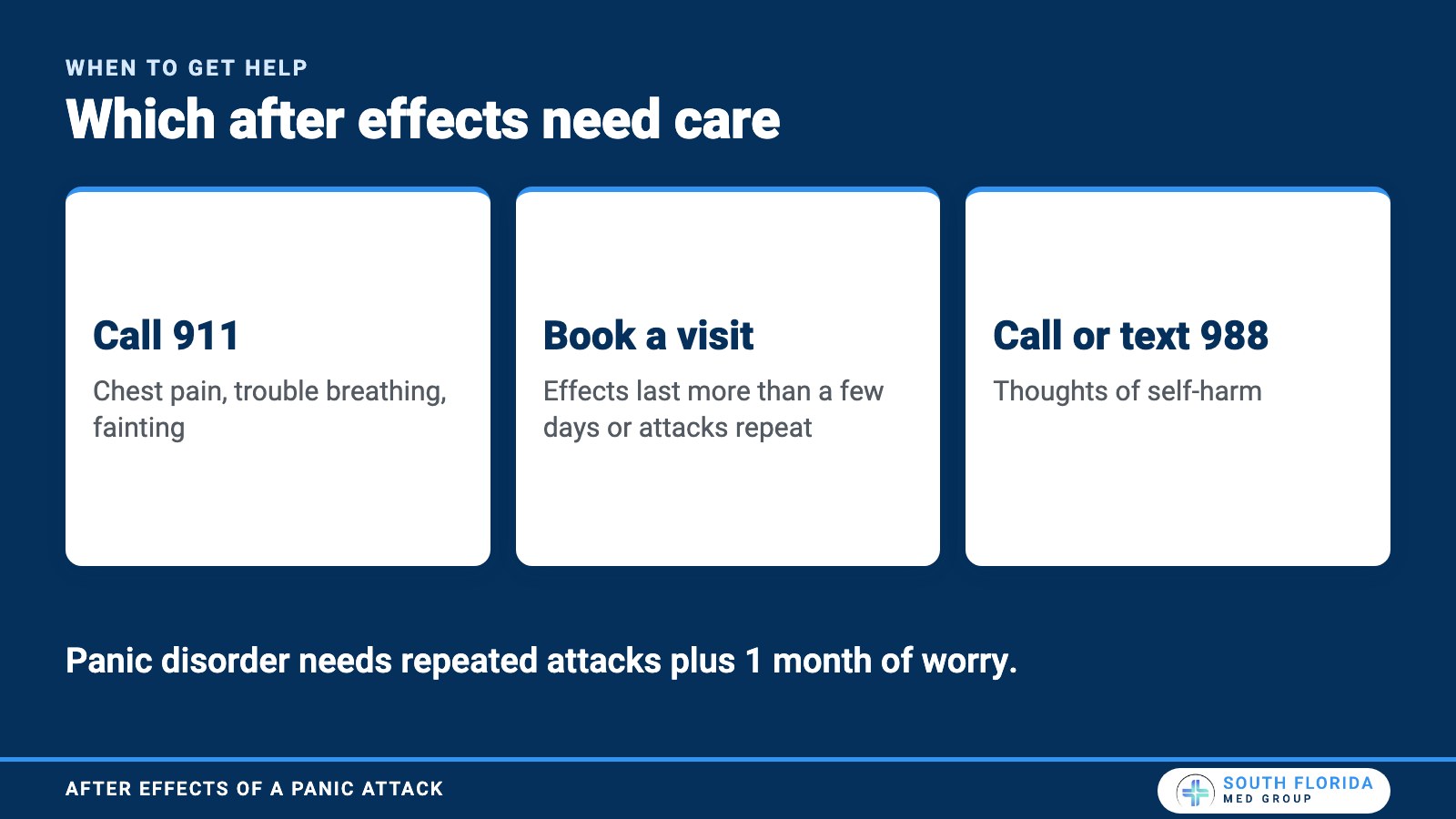
| Chest pain, trouble breathing, fainting | Possible emergency | Call 911 |
| Thoughts of self-harm | Crisis | Call or text 988 |
The table shows that timing and severity decide the next step. The graphic below maps a typical recovery from the attack through the next day.
Can You Prevent the After Effects of a Panic Attack?
You cannot always prevent the after effects of a panic attack, but you can shrink them with sleep, food, and calm breathing. NIMH advises regular exercise, steady meals, enough sleep, and less caffeine to ease stress. These habits lower the body's baseline alarm level.
- Keep a steady sleep and wake time.
- Eat regular meals and drink water through the day.
- Cut back on coffee, energy drinks, and alcohol.
- Practice slow breathing when calm and during an attack.
- Move your body for a short walk each day.
Practice makes breathing automatic during an attack. Fear of the next attack is the other piece, and it needs its own plan.
How Do You Stop Fearing the Next Panic Attack?
Stop fearing the next panic attack by learning that the sensations are harmless and temporary. NIMH says the attacks themselves are not life-threatening. CBT teaches a person to react differently to the body sensations that set off fear.
Interoceptive exposure, a CBT method, safely recreates sensations such as a racing heart so the brain learns they pass. Avoiding places where attacks happened can feed the fear. Ongoing worry for 1 month or more is a reason to seek an evaluation.
When Should You See a Provider After a Panic Attack?
See a provider when after effects last more than a few days or attacks keep coming back. NIMH states that panic disorder requires recurrent, unexpected attacks plus at least 1 month of worry about more attacks or changed behavior. An isolated attack is not a mental disorder.
MedlinePlus notes that many people have only one or two panic attacks in a lifetime and get better without treatment. Repeated attacks respond to care. NIMH says cognitive behavioral therapy (CBT) can make attacks less frequent. For a crisis, call or text the 988 Suicide and Crisis Lifeline at 988.
What Treatments Help After Repeated Panic Attacks?
Psychotherapy, medication, or both treat repeated panic attacks, according to NIMH. CBT teaches new ways to react to body sensations. SSRIs and SNRIs, two antidepressant classes, may take several weeks to work, and prescribers adjust the plan over time. Never stop these medicines abruptly without your prescriber.
The graphic below shows which after effects call for a 911 call, a visit, or the 988 lifeline.
What Else Should You Know About Panic Attack Recovery?
Does Your Chest Hurt After a Panic Attack?
Yes, chest soreness can follow a panic attack because the chest muscles tighten and breathing speeds up. Any chest pain that is severe, spreads to the arm or jaw, or comes with trouble breathing needs a 911 call. Unsure about the heart attack worry, the linked guide explains the difference.
Can You Faint After a Panic Attack?
Yes, fainting can follow a panic attack when fast breathing or dizziness drops blood flow to the brain. Sitting down early lowers the risk. Learn why passing out happens and when to get help.
Should You Drive After a Panic Attack?
No, wait to drive until the shaking, dizziness, and fog have cleared. Fatigue and slow reaction time make driving riskier. Rest first, then drive once your head is clear.
Should You Go to Work After a Panic Attack?
Yes, you can return to work once your symptoms ease, though a short break first helps. Take water, a snack, and a few quiet minutes. Tell a trusted coworker if you need space.
Should You Exercise After a Panic Attack?
Yes, gentle movement such as a walk or stretching can help once the shaking stops. NIMH lists exercise among stress habits. Skip hard workouts while the heart still races.
Does a Panic Attack Cause High Blood Pressure?
A panic attack raises blood pressure for a short time, because Harvard Health says adrenaline raises pulse and blood pressure. The rise settles as the alarm ends. Ask your clinician about blood pressure checks if readings stay high.
What Should You Say to Someone After a Panic Attack?
Say something short and calm, such as "You are safe, and I am here." Avoid telling the person to relax. Our guide on supporting someone lists more phrases.
Frequently Asked Questions
What Happens After Your First Panic Attack?
After a first panic attack, people commonly feel drained, shaky, and worried about another one. NIMH says an isolated attack is not a mental disorder. A check-up helps rule out medical causes.
Can Panic Attacks Have After Effects?
Yes, panic attacks can have after effects such as fatigue, body aches, headache, and brain fog. The effects reflect the stress response, not damage. They usually fade within hours to days.
Does Anxiety Linger After a Panic Attack?
Yes, anxiety can linger after a panic attack, and NIMH notes that fear of future attacks may lead to ongoing anxiety. Slow breathing, grounding, and rest help. Anxiety that lasts more than a few days deserves an evaluation.
How Long After a Panic Attack Will You Feel Normal?
Feeling close to normal takes several hours to a few days. Sleep, food, and calm surroundings speed the return. Symptoms that last more than a few days need a provider.
Can You Feel Sick or Throw Up After a Panic Attack?
Yes, nausea and stomach pain can follow a panic attack, and NIMH lists stomach pain or nausea among symptoms. Small sips of water and bland food help. Persistent vomiting needs medical care.
Is Sleep Good After a Panic Attack?
Yes, sleep supports recovery after a panic attack, though adrenaline can make falling asleep slow. A calm routine and a cool, dark room help. Repeated night attacks deserve an evaluation.
How Does South Florida Med Group Help With Panic Attack Recovery?
South Florida Med Group helps patients recover from panic attacks with evaluation, therapy, and medication management. Stephanie Cabrera, DNP, PMHNP-BC, FNP-BC, leads care at our Hialeah office, titled Miami Lakes on our site. She is a psychiatric-mental health nurse practitioner and family nurse practitioner. She checks medical causes, builds a plan, and tracks progress.
Talk-based panic therapy teaches new ways to respond to panic sensations. Sessions build skills such as slow breathing and exposure to body sensations. Patients practice these skills between visits.
Patients who take medicine meet for a prescriber follow-up to review how it works. Doses and side effects are checked at each visit. Telehealth visits work when travel is hard, and in-person visits remain open for patients who prefer them.
Anyone needing panic recovery support can call (786) 860-8844 for an in-person or telehealth visit. Our team will help you build a plan that fits your schedule, your symptoms, and your goals for recovery.
Stephanie Cabrera and the care team welcome new and returning patients. Visit South Florida Med Group online to meet the team and book when you are ready.