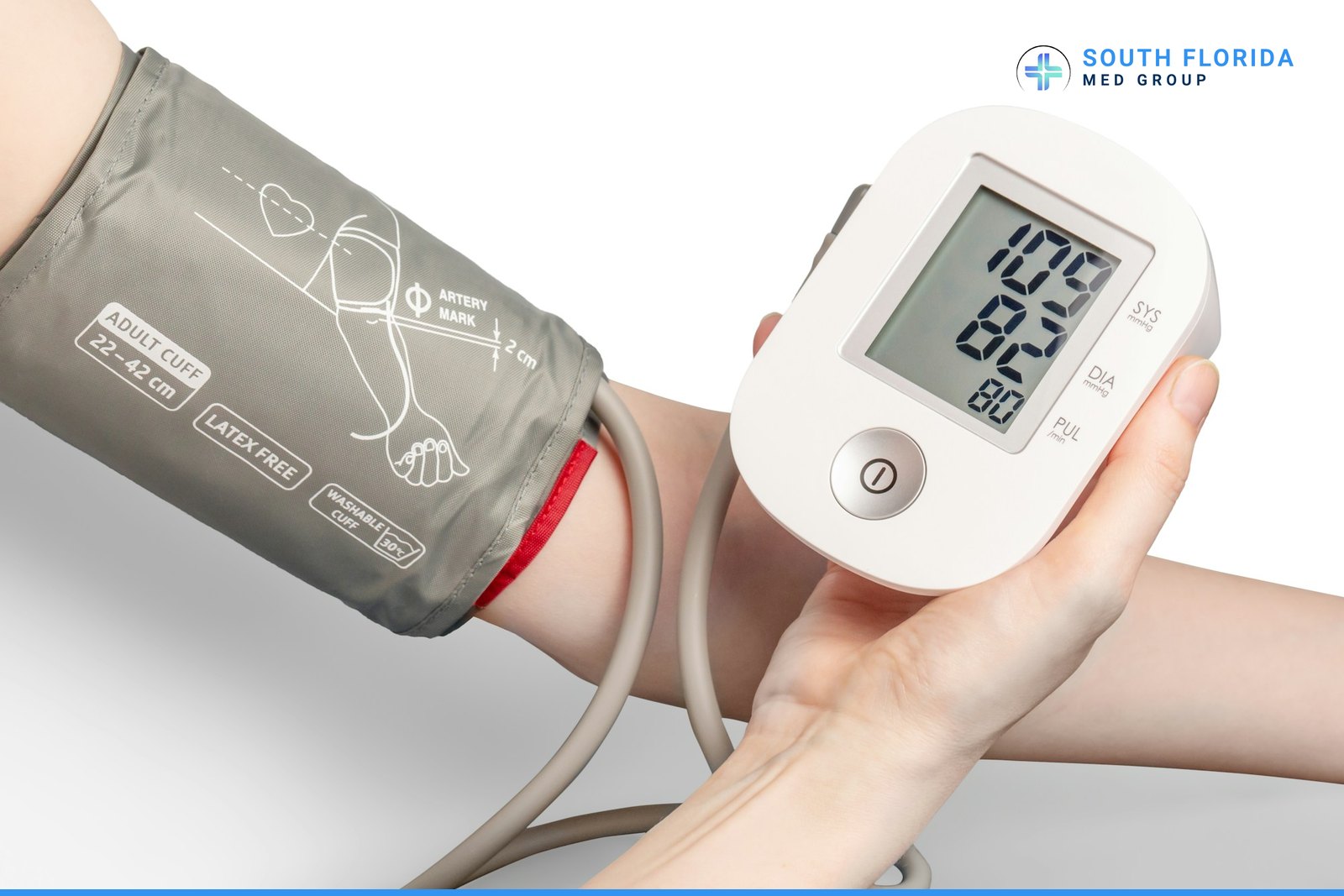


No single drug is the best anxiety medication for high blood pressure. The match depends on the heart, lungs, and other prescriptions. Propranolol (Inderal) lowers blood pressure and calms a racing heart. Buspirone and escitalopram (Lexapro) show little blood pressure effect. Venlafaxine (Effexor XR) raised systolic pressure to 180 or higher in 1% of trial patients. A prescriber weighs each option.
Key Takeaways
- Beta blockers such as propranolol treat high blood pressure and calm physical anxiety symptoms, but anxiety is an off-label use.
- Venlafaxine (Effexor XR) and duloxetine (Cymbalta) carry label warnings about raised blood pressure.
- Escitalopram showed no clinically important vital sign changes in its label trials.
- Stimulant ADHD medicines raised blood pressure by a mean of about 2 to 4 mm Hg in the Adderall label.
- Propranolol, clonidine, and alprazolam need a gradual taper, because sudden stops can raise blood pressure or heart strain.
- A reading above 180 systolic or 120 diastolic with chest pain, weakness, or vision changes needs 911.
What Is the Best Anxiety Medication for High Blood Pressure?
The best anxiety medication for high blood pressure is the one a prescriber matches to the person. No single drug fits everyone. The National Institute of Mental Health (NIMH) says providers start panic and social anxiety care with antidepressants called SSRIs. They have fewer side effects than other options. Blood pressure, heart rhythm, lung health, and current prescriptions decide which option stays on the list.
Our medication management visit starts with this full review. The table below shows how each major anxiety medicine behaves in people with high blood pressure.
| Medicine | Blood pressure effect | Label detail |
|---|---|---|
| Propranolol (Inderal LA) | Lowers | Indicated for hypertension, not anxiety; contraindicated in bronchial asthma |
| Escitalopram (Lexapro) | No important change | Trials found no clinically important vital sign changes |
| Buspirone | Little effect alone | Elevated blood pressure reported when added to an MAOI |
| Venlafaxine (Effexor XR) | Raises, dose-related | Control hypertension before starting; monitor regularly |
| Duloxetine (Cymbalta) | Can raise | Monitor blood pressure before and during treatment |
| Alprazolam (Xanax) | Hypotension reported | Abrupt stops can cause life-threatening withdrawal |
The table shows why the answer changes from person to person. The next question is how anxiety itself acts on blood pressure.
Does Anxiety Cause High Blood Pressure?
Anxiety raises blood pressure briefly during a surge of stress hormones. A 2021 meta-analysis also linked anxiety to a higher risk of hypertension. The study pooled 59 studies and 4,012,775 participants. It found an odds ratio of 1.37 in cross-sectional studies and 1.40 in prospective studies.
An odds ratio above 1.0 means the two conditions appear together more than chance predicts. The authors wrote that anxiety may come before hypertension. The NIMH reports that 19.1% of US adults had an anxiety disorder in the past year, so the overlap reaches many households.
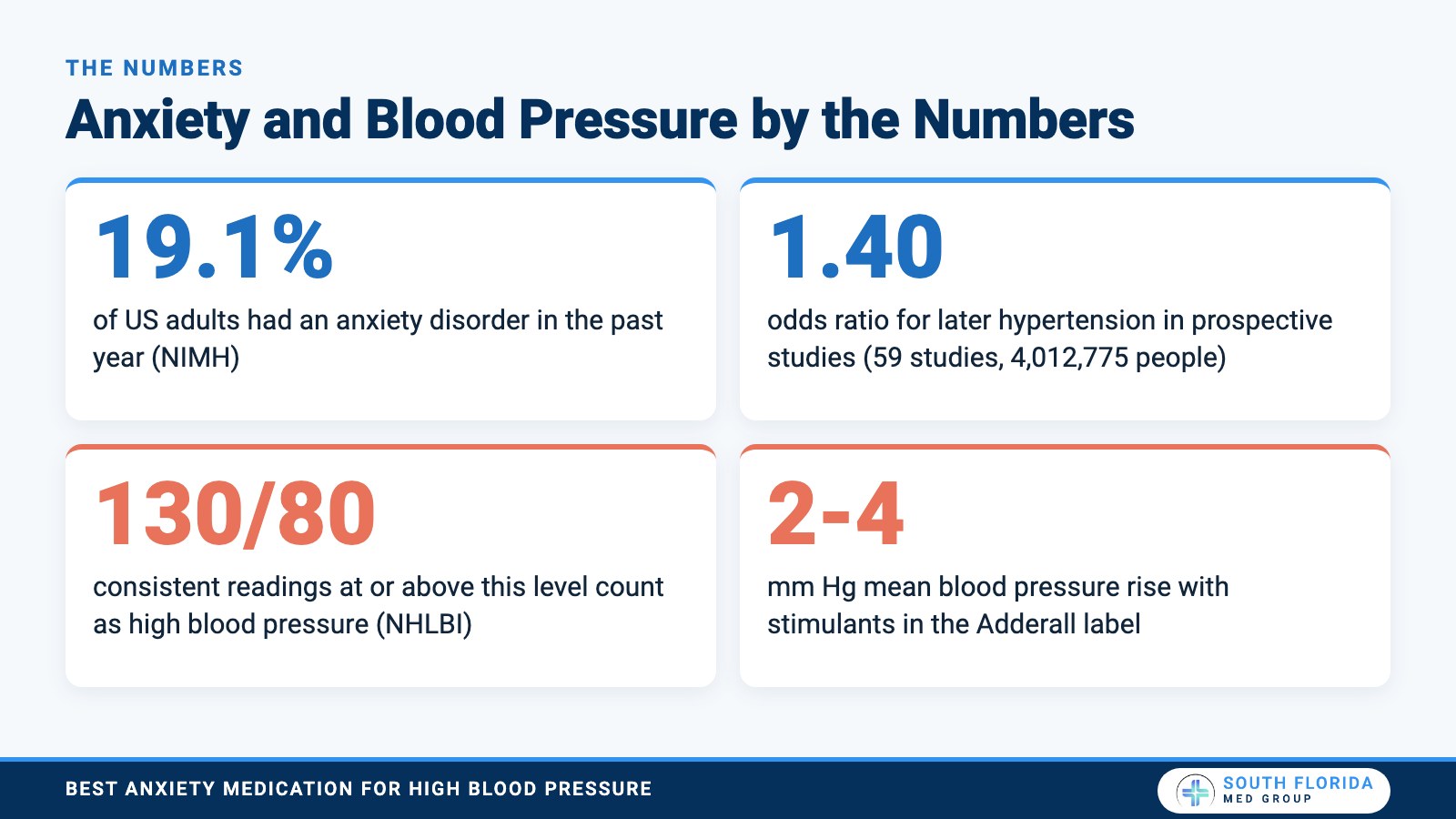
The graphic above lists the key numbers behind this link. These numbers raise the next practical question about drug effects.
Will Anxiety Make Your Blood Pressure High?
Anxiety can make blood pressure rise for minutes to hours, and a single reading during a panic attack does not diagnose hypertension. The National Heart, Lung, and Blood Institute (NHLBI) sets high blood pressure at consistent readings of 130 systolic or 80 diastolic. A spike during stress is not a consistent reading.
Adrenaline speeds the heart and tightens blood vessels during the fight-or-flight response. Repeated home readings separate a stress spike from true hypertension. Those readings also show whether a medicine is helping.
Can Anxiety Medication Lower Blood Pressure?
Anxiety medication can lower blood pressure in two ways, but only beta blockers have a labeled blood pressure purpose. Propranolol lowers blood pressure because the Inderal LA label lists hypertension as an indication. The Xanax label lists hypotension among its common adverse reactions in anxiety and panic trials.
Low blood pressure from a sedating drug is a side effect, not a treatment. The Cymbalta label adds that falls and orthostatic hypotension (a drop on standing) may carry greater risk with antihypertensive medicines. No anxiety medicine replaces a blood pressure medicine. The reverse question comes next.
Can Anxiety Medication Cause High Blood Pressure?
Yes, anxiety medication can cause high blood pressure when it contains a serotonin-norepinephrine reuptake inhibitor (SNRI) such as venlafaxine or duloxetine. The Effexor XR label reports dose-related blood pressure increases and cases of sustained hypertension. The label tells prescribers to control existing hypertension before starting.
Across all clinical studies, 1.4% of Effexor XR patients had a diastolic rise of 15 mm Hg to 105 or higher. Placebo patients showed 0.9%. About 1% had a 20 mm Hg systolic rise to 180 or higher, versus 0.3% on placebo. The Cymbalta label says the drug may cause an increase in blood pressure and calls for monitoring before and during treatment.
Escitalopram and buspirone show a different pattern. The next section covers who can use them.
Which Anxiety Medications Are Safe With High Blood Pressure?
Escitalopram and buspirone carry no label warning about raising blood pressure alone. That keeps them on the list for people with hypertension. The Lexapro label reports no clinically important vital sign changes versus placebo in its trials. The buspirone label warns only about elevated blood pressure when it joins an MAOI (monoamine oxidase inhibitor).
Each drug still carries other risks and dosing rules. The label starting ranges below are published facts, not recommendations for any person.
| Medicine | Label use | Typical label starting dose |
|---|---|---|
| Venlafaxine (Effexor XR) | Generalized anxiety disorder | 75 mg per day, with 37.5 mg for 4 to 7 days as an option |
| Duloxetine (Cymbalta) | Generalized anxiety disorder | 60 mg once daily, or 30 mg for 1 week |
| Buspirone | Anxiety disorders | 15 mg daily, given as 7.5 mg twice daily |
| Alprazolam (Xanax) | Anxiety and panic | 0.25 mg to 0.5 mg three times daily |
| Propranolol (Inderal LA) | Hypertension | 80 mg once daily |
| Clonidine tablets | Hypertension | 0.1 mg twice daily |
The table lists label starting doses for each drug. A prescriber sets the real dose after reviewing blood pressure, kidney and liver health, and other medicines. Blood pressure medicines can also treat anxiety symptoms, as the next section explains.
Can Blood Pressure Medication Help Anxiety?
Blood pressure medication can help anxiety only in specific cases, because beta blockers like propranolol calm physical symptoms and are used off-label. The NIMH says providers may prescribe beta-blockers off-label for short-term anxiety symptoms, although the drug is not approved for that purpose. The agency notes they can manage rapid heart rate, sweating, and tremors.
The off-label status matters for safety. A primary care visit confirms the blood pressure diagnosis first. Our blood pressure care pairs with psychiatric review when anxiety is part of the picture. The next question covers the drug that people ask about most.
Is Propranolol Used for Anxiety?
Yes, providers use propranolol for anxiety off-label, but the FDA label lists hypertension, angina, and migraine prevention as its indications. The MedlinePlus entry for propranolol notes it is sometimes used to treat anxiety and advises talking to a doctor about the risks. A beta blocker is a drug that blocks adrenaline at beta receptors.
The same drug answers a related search, does propranolol calm you down. Propranolol quiets a racing heart and shaking hands, and it does not target worry or intrusive thoughts. That limit leads to the question of how beta blockers work.
How Do Beta Blockers Work for Anxiety?
Beta blockers work for anxiety by blocking adrenaline at beta receptors, which slows the heart and lowers blood pressure. MedlinePlus describes propranolol as a medicine that relaxes blood vessels and slows heart rate to decrease blood pressure. The physical symptoms of fight-or-flight ease as a result.
The steps below show the chain from stress to symptom relief.
- A stressor triggers adrenaline release.
- Adrenaline binds beta receptors in the heart and blood vessels.
- The heart beats faster and blood pressure climbs.
- Propranolol occupies the receptors, so adrenaline has less effect.
- Heart rate and blood pressure fall, and shaking eases.
This chain explains why beta blockers fit a specific type of anxiety. It also explains why some people must avoid them.
Who Should Avoid Beta Blockers for Anxiety?
People with bronchial asthma, a very slow heartbeat, or cardiogenic shock should avoid propranolol. The Inderal LA label lists these as contraindications, along with higher than first-degree heart block. Beta blockers can also provoke breathing trouble in people with bronchospastic lung disease.
MedlinePlus asks patients to report a slow or irregular heartbeat, heart failure, asthma, diabetes, and thyroid disease to the prescriber. The Inderal LA label also warns that abrupt withdrawal may worsen hyperthyroid symptoms. A full health history keeps the drug choice safe, and clonidine raises a similar set of questions.
Is Clonidine Used for Anxiety and Blood Pressure?
Clonidine treats high blood pressure on its label, and prescribers sometimes use it for anxiety symptoms off-label. The clonidine tablet label lists hypertension as the indication and gives 0.1 mg twice daily as the initial dose. The label does not list anxiety.
The same label warns that sudden cessation can cause nervousness, agitation, headache, and tremor, followed by a rapid rise in blood pressure. Patients should not stop without talking to a prescriber. Rebound blood pressure is the main clonidine risk to understand. SSRIs raise a different set of questions.
Do SSRIs Raise Blood Pressure?
SSRIs like escitalopram did not change blood pressure in a clinically important way in the Lexapro label trials. The label compared pulse, systolic pressure, and diastolic pressure against placebo. That result suits many adults with anxiety and hypertension.
SSRIs still carry side effects. The NIMH lists upset stomach, headache, and sexual dysfunction, and says these tend to go away with time. Our anxiety evaluation weighs those effects against symptom relief.
Can You Take ADHD Medication With High Blood Pressure?
Yes, some adults take ADHD medication with high blood pressure, but stimulants raise blood pressure and need monitoring. The Adderall label says stimulants raise blood pressure by a mean of about 2 to 4 mm Hg. Heart rate rises by about 3 to 6 beats per minute. The label adds that some patients have larger increases.
The label tells prescribers to monitor every patient for tachycardia and hypertension. Adults with both conditions can ask about a different drug class. A prescriber compares the blood pressure history, the heart rate, and the anxiety symptoms before choosing.
Anxiety also overlaps with attention problems in many adults. Our adult ADHD care team reviews blood pressure before any stimulant starts. The review covers resting heart rate, family heart history, and every current prescription.
Non-stimulant drugs raise a different set of questions about blood pressure. Our non stimulant options guide compares them.
Can Anxiety Medication Interact With Blood Pressure Medication?
Anxiety medication can interact with blood pressure medication, and the main concern is blood pressure that drops too low. The Cymbalta label says the risk of blood pressure decreases may be greater when patients take antihypertensives. Dizziness, fainting, and falls are the warning signs.
Sedating drugs add to this effect. The Xanax label lists hypotension as a common adverse reaction and warns that opioids with benzodiazepines can cause profound sedation. A prescriber reviews every active medicine at each visit, so regular medication monitoring matters.

The comparison panel shows each drug class and its blood pressure direction. Monitoring at home confirms those effects in a real person.
How Should You Monitor Blood Pressure on Anxiety Medication?
Monitor blood pressure on anxiety medication by checking home readings with a validated upper-arm cuff. Share the log with the prescriber. The NHLBI marks 130 systolic or 80 diastolic as the start of high blood pressure. Consistent readings matter more than a single number.
- Sit quietly for five minutes with feet flat and back supported.
- Rest the cuffed arm at heart level on a table.
- Take two readings one minute apart.
- Record both numbers, the time, and any new symptoms.
- Bring the log to every medication visit.
The log lets a prescriber see whether a medicine changed the pattern. A written log beats memory at every visit. Our telehealth follow-ups let patients share these readings from home.

The checklist above turns those steps into a card for the refrigerator. Some readings need faster action than a log.
When Is High Blood Pressure With Anxiety an Emergency?
High blood pressure with anxiety is an emergency when a reading passes 180 systolic or 120 diastolic and symptoms appear. The NHLBI defines a hypertensive crisis as higher than 180 systolic or 120 diastolic. It says to contact a provider immediately. Chest pain, shortness of breath, fainting, vision changes, or weakness on one side means call 911. Go to the nearest emergency room.
Panic attacks can mimic heart events, so chest symptoms need a medical check. Our guide on how panic heart symptoms overlap explains the differences. Medicine changes bring the next risk.
Can You Stop Anxiety or Blood Pressure Medication Suddenly?
No, do not stop anxiety or blood pressure medication suddenly, because the label risks include rebound blood pressure and withdrawal. MedlinePlus says suddenly stopping propranolol may cause serious heart problems. The Xanax label says abrupt discontinuation can precipitate life-threatening withdrawal reactions.
The Effexor XR label also reports increased blood pressure after stopping or reducing the dose. A prescriber builds a gradual taper for each drug. Our guide to stopping medication safely explains the process. Therapy offers another path for some patients.
What Helps Anxiety and High Blood Pressure Without Medication?
Therapy, regular movement, steady sleep, and less caffeine help both anxiety and blood pressure. They work beside medication, not in place of it. Cognitive behavioral therapy (CBT) teaches skills that lower stress responses. The meta-analysis above supports treating anxiety early because anxiety may come before hypertension.
- Practice CBT skills with a licensed therapist.
- Walk or exercise on a schedule that a primary care provider approves.
- Keep a regular sleep and wake time.
- Cut back on caffeine, which can speed the heart.
- Limit alcohol, which affects both blood pressure and anxiety.
Our CBT skills sessions teach these methods. Therapy and medicine can run side by side, and the next sections answer common side questions.
What Else Should You Know About Anxiety Medication and Blood Pressure?
What Is the Magic Anxiety Pill That Isn't Xanax?
No magic anxiety pill exists, and the NIMH lists SSRIs, SNRIs, benzodiazepines, and off-label beta blockers as the main options. Each has different benefits and blood pressure effects. A quick screen such as our anxiety medication quiz shows how providers decide.
What to Expect When Starting Anxiety Medication?
Expect gradual change when starting anxiety medication, with mild side effects that tend to fade. The NIMH says people sensitive to side effects may start with a low dose and increase slowly. Blood pressure readings at home track the response in the first weeks.
How to Get Over Fear of Taking New Medication?
Get over fear of a new medication by naming each worry and asking the prescriber to answer it before the first dose. Ask about side effects, blood pressure effects, and the plan if a symptom appears. Written answers lower the guesswork.
Where Can You Get Help When Anxiety Feels Out of Control?
Call or text 988, the Suicide and Crisis Lifeline, for thoughts of self-harm. Call 911 or go to the nearest emergency room for chest pain or fainting. Anxiety that feels out of control also deserves a same-week appointment with a prescriber.
Frequently Asked Questions
Does Xanax Lower Blood Pressure?
Xanax can lower blood pressure, and the label lists hypotension among its common adverse reactions in anxiety and panic trials. The effect is a side effect, not a treatment. Abrupt stops carry life-threatening withdrawal risk.
Does Propranolol Calm You Down?
Propranolol calms physical symptoms such as a pounding heart and tremor by blocking adrenaline. The drug does not target worry or racing thoughts. The NIMH describes its anxiety use as off-label and short-term.
Can Blood Pressure Medication Cause Anxiety?
Blood pressure medication can cause side effects such as dizziness and lightheadedness, which some people find alarming. A new feeling of anxiety after a start or dose change belongs in the next prescriber conversation. Do not stop the medicine without that talk.
Does Worrying Raise Blood Pressure?
Worrying can raise blood pressure for a short time through stress hormones. The 2021 meta-analysis found an odds ratio of 1.40 for later hypertension in people with anxiety. Repeated readings show the true pattern.
Can Treating Anxiety Reduce the Need for Blood Pressure Medication?
Treating anxiety may improve blood pressure control, but the evidence does not support dropping a blood pressure medicine. Only the prescriber can change that plan. Keep taking prescribed medicine until that visit.
What Blood Pressure Reading Counts as High?
The NHLBI says blood pressure is high with consistent readings of 130 systolic or higher, or 80 diastolic or higher. Stage 2 starts at 140 systolic or 90 diastolic. Readings above 180 or 120 are a crisis.
How Does South Florida Med Group Help With Anxiety and High Blood Pressure?
South Florida Med Group helps adults compare options for the best anxiety medication for high blood pressure. The review combines psychiatric and primary care. Stephanie Cabrera, DNP, PMHNP-BC, FNP-BC, reviews blood pressure readings, heart and lung history, and current prescriptions before any anxiety medicine starts. Our psychiatric medication plan then tracks blood pressure at each visit. Visits take place in person or by telehealth.
Patients near Hialeah and Miami Lakes can call (786) 860-8844, Monday to Friday, 10 AM to 6 PM. The team of South Florida Med Group coordinates anxiety care and blood pressure follow-up in one place.