

To stop a panic attack fast, breathe in for 4 seconds, out for 6 seconds, and name five objects you see. The National Health Service (NHS) says most panic attacks last 5 to 20 minutes. The National Institute of Mental Health (NIMH) says panic attacks are not life-threatening. The steps below take about two minutes and work almost anywhere, from a desk to a parked car.
Key Takeaways
- A long exhale, grounding, and cool water interrupt the body's alarm within minutes.
- Cleveland Clinic reports that panic symptoms peak within 10 minutes, so a short routine covers the hardest stretch.
- Xanax (alprazolam) is FDA-approved for panic disorder, but its label carries a boxed warning for dependence and withdrawal.
- Alcohol does not stop an attack, and the NHS lists it among triggers that make attacks worse.
- Cognitive behavioral therapy (CBT) lowers how often attacks return, with 48.7% of patients responding in one JAMA trial.
- Chest pain, fainting, or trouble breathing needs a call to 911 or a trip to the nearest emergency room.
How to Stop a Panic Attack Fast?
Stop a panic attack fast by slowing your exhale, grounding your senses, and reminding yourself that the attack will pass. The fastest routine takes about two minutes and uses five steps. A panic attack is a sudden surge of fear with body symptoms, such as a pounding heart. Adrenaline, the stress hormone, drives those symptoms.
- Say "This is a panic attack, and it will pass" in your head or out loud.
- Breathe in through your nose for 4 seconds, then out through your mouth for 6 seconds.
- Name 5 objects you see, 4 you touch, 3 you hear, 2 you smell, and 1 you taste.
- Cool your face or hands with cold water.
- Stay where you are, if possible, until the peak passes.
The NHS gives similar advice: stay put, breathe slowly and deeply, and remember the attack is not life threatening. Repeated attacks call for professional panic attack treatment, covered later in this guide. The next section shows how to run these steps in 60 seconds.
How to Stop a Panic Attack Immediately?
Stop a panic attack immediately by starting with one sharp action, because no technique ends an attack in a single second. The fastest first move is a long exhale, since fear speeds breathing and a slow exhale reverses that pattern. Each step then builds on the one before it.
The 60-second sequence has three parts. Name the attack for 10 seconds. Take four slow breaths for 40 seconds. Spend the last 10 seconds picking out five objects in the room. One breath of 4 seconds in and 6 seconds out lasts 10 seconds, so four breaths fill the middle block. The graphic below shows the timing.
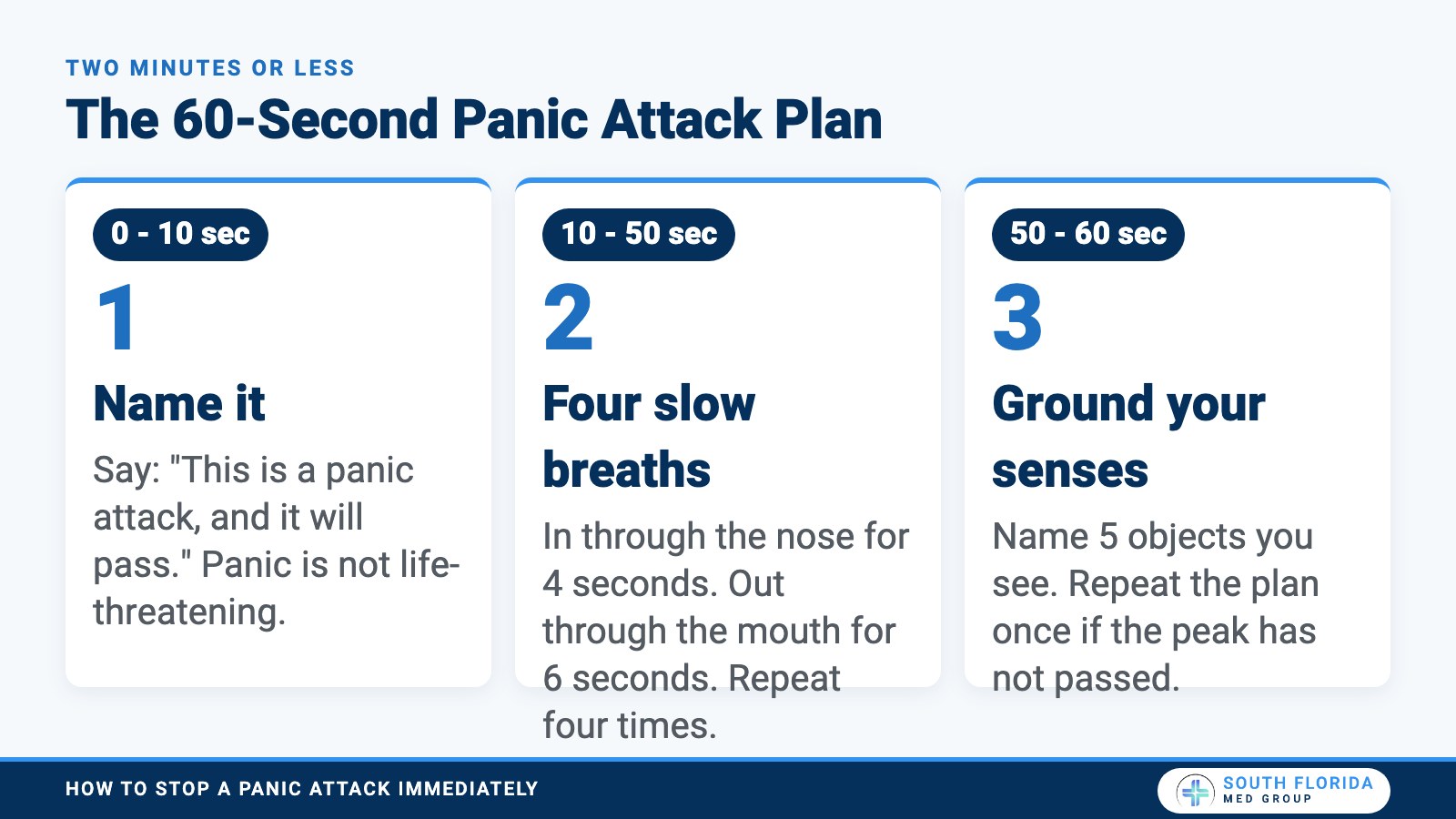
Repeat the sequence once if the peak has not passed. Breathing is the core of that sequence, so it deserves a closer look.
Does Breathing Stop a Panic Attack?
Yes, slow breathing helps stop a panic attack because it reverses the fast, shallow breathing that lowers carbon dioxide. Slow breathing calms the body within a few cycles, based on research on breathing pace. A 2018 systematic review in Frontiers in Human Neuroscience pooled 15 studies from 2,461 abstracts. Slow breathing under 10 breaths per minute raised heart rate variability, a marker of a calmer nervous system.
Panic-specific data comes from a 2010 trial of 41 patients with panic disorder. Four weeks of breathing training moved carbon dioxide levels from low to normal. Symptoms fell as much as they did with cognitive training. Hyperventilation is breathing too fast, and it drops carbon dioxide, which causes tingling and dizziness.
Learning how to stop hyperventilating panic attack symptoms starts with a full exhale, then the 4-second inhale and 6-second exhale. The 4-7-8 pattern adds a 7-second hold, but breath holds feel uncomfortable for some people. Start with the 4-and-6 pattern, and add the hold only when it feels easy. Breathing handles the body, and grounding handles attention.
What Works Immediately for Panic Attacks?
Five quick tools work immediately for many people: a long exhale, 5-4-3-2-1 grounding, cold water, muscle release, and a strong taste. Combine two tools to cover both the body and the mind. Grounding is a set of exercises that pull attention to the present through the senses. The table below compares all five tools.
| Tool | What to do | How it helps | Time needed |
|---|---|---|---|
| Long exhale | Breathe in for 4 seconds and out for 6 seconds. | Slows the pulse and restores carbon dioxide. | About 1 minute |
| 5-4-3-2-1 grounding | Name 5 sights, 4 touches, 3 sounds, 2 smells, and 1 taste. | Moves attention away from fearful thoughts. | 1 to 2 minutes |
| Cold water | Splash the face or hold a cold cloth on the cheeks. | Triggers the diving response, which slows the heart rate. | 30 seconds |
| Muscle release | Tense fists, shoulders, and legs for 5 seconds, then release. | Lowers the muscle tension that adrenaline creates. | 2 minutes |
| Strong taste | Suck a sour candy or a strong mint. | Gives the brain a sharp sensation to focus on. | 1 to 2 minutes |
The table shows that each tool targets a different part of the alarm response. Cold water is the least familiar of the five, so the next section explains why it works.
Does Cold Water Stop a Panic Attack?
Cold water can calm a panic attack because chilling the face triggers the diving response, a reflex that slows the heart rate. Splashing cold water on the face is the simplest way to use it. A 2011 review in the Journal of Cardiovascular Medicine reports a human heart rate drop of 15% to 40% during diving.
That review studied diving, not panic attacks. Using the reflex for panic is a reasonable tactic, not a proven treatment. This explains why cold water stops a panic attack for many people: the body shifts toward a slower pulse. Hold a cold wet cloth on the cheeks for 30 seconds, or press a cold glass against the wrists. Cold sensations are one kind of strong sensation, and taste is another.
Can Sour Candy Stop a Panic Attack?
Sour candy can help stop a panic attack by pulling attention to an intense taste. Proof that it works alone is lacking. Sour candy works as a grounding tool, not as a medical treatment. Taste is the fifth step of the 5-4-3-2-1 method, so a strong flavor fits inside that routine.
The NHS lists sugary food and drinks among the triggers that can make attacks worse. A strong mint or a sip of cold sparkling water gives the same sharp sensation with less sugar. Taste is only useful once the attack has started, and early action matters more.
How to Stop a Panic Attack Before It Starts?
Stop a panic attack before it starts by spotting the first warning signs and beginning slow breathing at once. Early signs include a tight chest, racing thoughts, and a wave of dread. NIMH notes that attacks can occur at any time, and some researchers think they resemble false alarms in the body's survival system. Acting at the first sign gives the exhale more room to work. Early warnings that keep returning are a reason to consult anxiety specialists.
- A tight throat or chest.
- A pulse that speeds up without exercise.
- Sudden dread without a clear cause.
- Tingling in the hands or lips.
At the first sign, start four slow breaths, plant both feet on the floor, and name the feeling as adrenaline. A companion guide on calming techniques adds a longer routine for attacks that are already underway. Some attacks show almost no outward sign, and those need a quiet version of the same steps.
How to Stop a Silent Panic Attack?
Stop a silent panic attack by using breathing and grounding in ways that nobody around you can see. A silent panic attack is an attack with few outward signs, and the term is not a formal medical diagnosis. The fear, pounding heart, and dizziness stay hidden, so the steps must stay hidden too.
Breathe through the nose in a slow 4-and-6 count. Press the feet into the floor and press the fingertips of both hands together. Name the colors in the room, and repeat a short phrase in your head. These moves look like ordinary pauses, which makes them practical in meetings and crowded places.
How to Stop a Panic Attack in Public or at Work?
Stop a panic attack in public by moving to a quieter spot, sitting or leaning, and starting slow breathing. Leaving the room briefly is acceptable, because the NHS advises staying where you are only when that is possible. A restroom, stairwell, or parked car offers privacy within seconds.
At work, tell one colleague that you need a short break, or send a one-line message. Run the 60-second sequence, drink cold water, and return once the peak has passed. Cleveland Clinic reports that symptoms peak within 10 minutes, so a short pause covers the hardest stretch. Some situations add their own limits, such as flights and driving.
How to Stop a Panic Attack on a Plane or While Driving?
Stop a panic attack on a plane by staying seated, breathing slowly, and telling a flight attendant if symptoms feel severe. Pressing the feet flat on the floor gives the body a steady point of contact. Cold water from the cabin crew and a fixed point to focus on, such as the seat-back pocket, support the grounding steps.
While driving, pull over at the first safe spot, park, and use slow breathing before moving again. Driving through the peak raises risk for you and others on the road. The graphic below sums up the plan for four common settings.
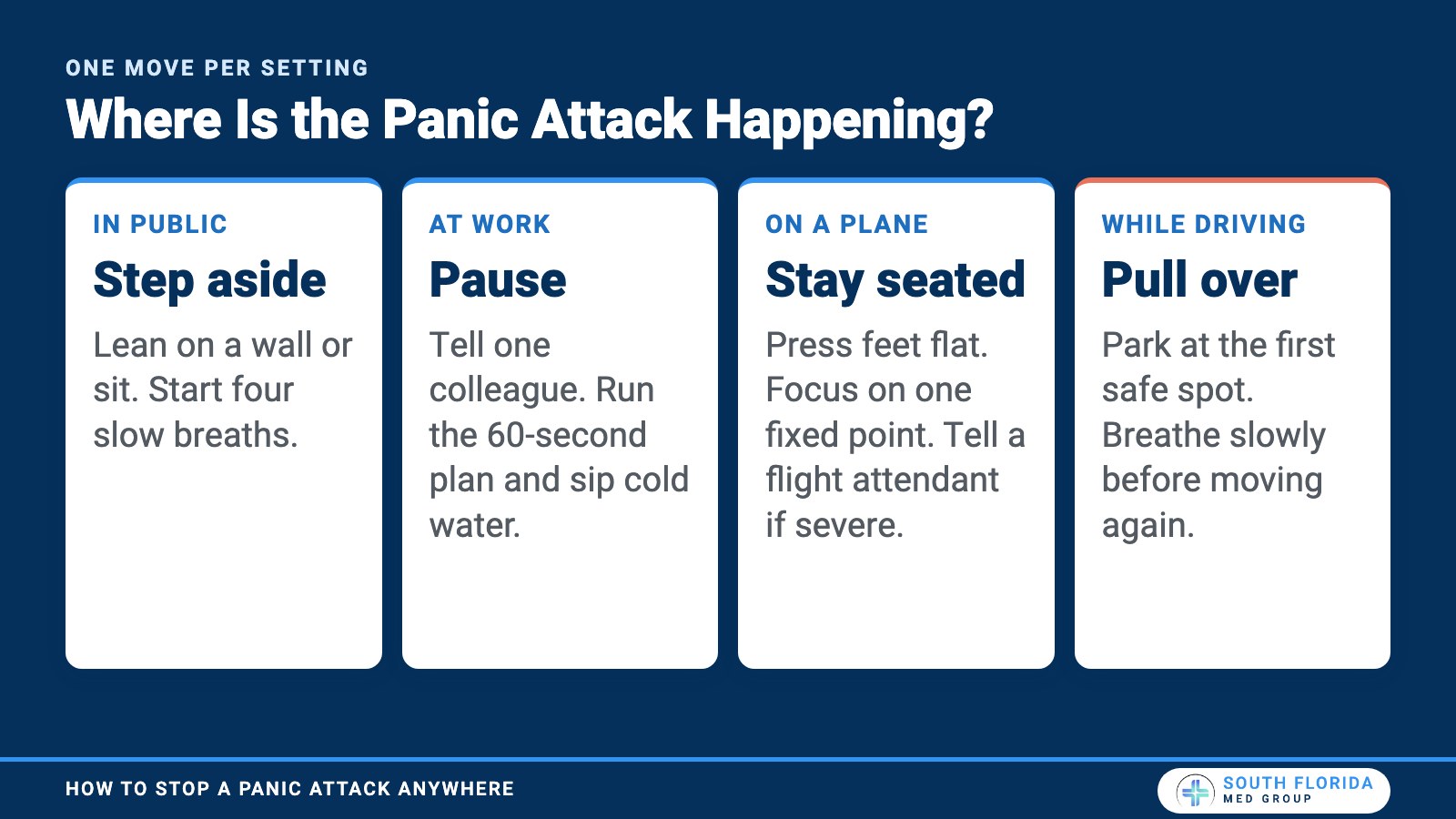
Self-help tools work for the moment, and some people also ask about medication. The next three sections cover what medicine can and cannot do in an attack.
What Medication Stops Panic Attacks Fast?
Benzodiazepines are the class of medication prescribed to reduce severe panic in the short term. NIMH describes benzodiazepines and beta-blockers as useful as needed in the short term. NIMH warns that long use may cause tolerance or dependence. Prescribers usually write them for short periods and taper them slowly. Daily medicines work differently, as the table below shows.
| Group | Examples | Role in panic | Main caution |
|---|---|---|---|
| Benzodiazepines | Alprazolam (Xanax), lorazepam (Ativan), clonazepam (Klonopin) | Used as needed for short-term relief. | Tolerance, dependence, and withdrawal. |
| Beta-blockers | Propranolol | Prescribed off-label for short-term symptoms. | Not for people with asthma or a slow pulse. |
| SSRIs and SNRIs | Sertraline (Zoloft), venlafaxine (Effexor XR) | Daily medicine that lowers attack frequency over time. | Take 4 to 8 weeks; never stop abruptly. |
| Antihistamine | Hydroxyzine | Studied for generalised anxiety, not panic. | Causes drowsiness. |
| Azapirone | Buspirone | Daily medicine for anxiety, not for as-needed use. | Needs 3 to 4 weeks for full effect. |
The table shows that only some medicines act as needed. A prescriber chooses between them after an evaluation, and the next section covers one specific option.
Will Xanax Stop a Panic Attack?
Yes, Xanax (alprazolam) is FDA-approved to treat panic disorder in adults, and a prescriber may use it for short-term relief. The Xanax label gives a starting oral dosage of 0.5 mg three times daily for panic disorder. That figure is a typical label starting range, and a prescriber sets the actual plan.
The label carries a boxed warning, the strongest FDA warning, for abuse, misuse, addiction, dependence, and withdrawal reactions. Abrupt stops can cause serious withdrawal, so never stop Xanax suddenly without your prescriber. Other medicines, such as hydroxyzine, work in a different way.
Will Hydroxyzine Stop a Panic Attack?
Hydroxyzine may ease anxiety symptoms, but evidence that hydroxyzine stops a panic attack is limited. A Cochrane review of five studies with 884 participants found hydroxyzine more effective than placebo for generalised anxiety disorder. That review studied generalised anxiety, not panic disorder, so its result does not transfer directly to panic.
Propranolol, a beta-blocker, blocks the effect of adrenaline on the heart. NIMH describes beta-blockers as prescribed off-label for short-term anxiety, and the Inderal LA label does not list anxiety as an indication. MedlinePlus warns that stopping propranolol suddenly may cause serious heart problems. A prescriber visit sorts out which option fits a medical history. Many people also reach for a drink in the moment, which brings up alcohol.
Does Alcohol Stop a Panic Attack?
No, alcohol does not stop a panic attack, and the NHS lists alcohol among the substances that can make attacks worse. Alcohol may dull tension briefly, but it raises the risk of repeated attacks. The Xanax boxed warning adds that misuse of benzodiazepines commonly involves alcohol, which increases serious outcomes.
Water, a short walk, or the 60-second sequence are safer choices. Caffeine belongs in the same category. The FDA cites 400 mg a day as an amount not generally associated with negative effects. Habits help, but lasting change comes from treatment.
How Do You Stop Panic Attacks From Coming Back?
Stop panic attacks from coming back with cognitive behavioral therapy (CBT), daily medication, or both. CBT teaches new ways to think and react during a panic attack, according to NIMH. In a 312-patient JAMA trial in 2000, 48.7% of CBT patients responded, compared with 21.7% on placebo.
A 2016 Cochrane network meta-analysis of 54 studies and 3,021 patients found CBT the most studied therapy. The effect was small, and the evidence was low quality. NIMH names SSRIs and SNRIs as the usual starting point for panic, and antidepressants take 4 to 8 weeks to work. Structured CBT for panic builds the breathing and grounding skills above into a plan. Learning how to stop a panic attack fast is the first skill, and prevention is the second.
When Should You Call 911 During a Panic Attack?
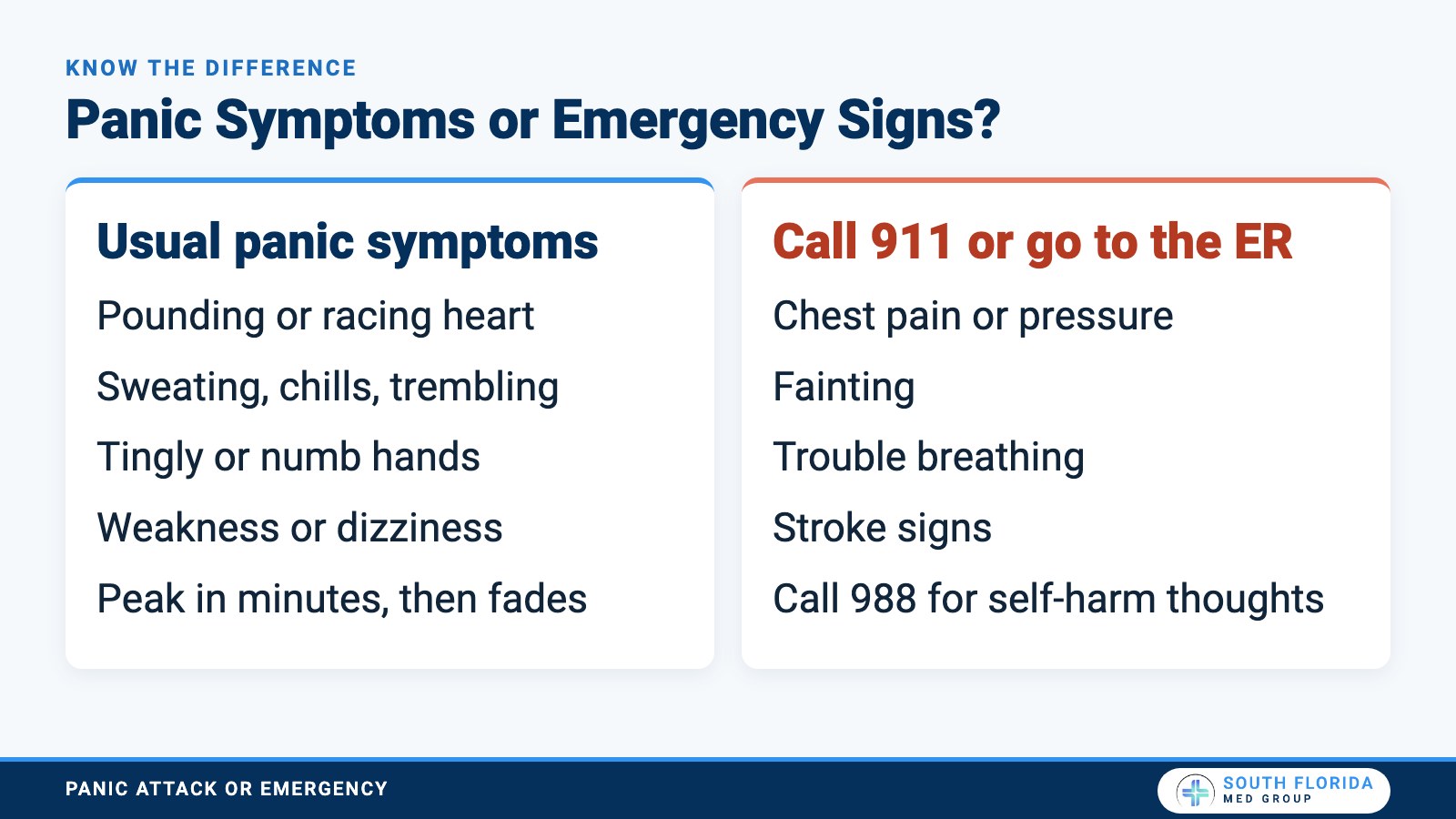
Call 911 or go to the nearest emergency room when chest pain, fainting, trouble breathing, or stroke signs appear. The National Heart, Lung, and Blood Institute (NHLBI) advises calling 9-1-1 when chest pain could be angina or a heart attack. Panic and heart attacks share symptoms, so a first episode needs medical review.
The graphic below separates usual panic symptoms from emergency signs. A separate post covers heart attack signs next to panic symptoms. Call or text 988 to reach the 988 Suicide and Crisis Lifeline when thoughts of self-harm appear.
What Else Should You Know About Stopping Panic Attacks?
How Long Does It Take to Stop a Panic Attack?
A panic attack usually stops within 5 to 20 minutes, and the NHS says some last up to an hour. Cleveland Clinic reports that symptoms peak within 10 minutes. A detailed guide covers attack length.
Can You Pass Out From a Panic Attack?
Panic attacks can bring weakness and dizziness, and NIMH lists both as symptoms. Chest pain or fainting needs 911 or an emergency room visit. A separate post explains fainting during panic in detail.
How to Stop Shaking or Crying During a Panic Attack?
Stop shaking by tensing the fists and legs for 5 seconds, then releasing them, and by sipping cold water. Adrenaline raises muscle tension and causes trembling, which NIMH lists as a symptom. Crying is a normal release, so let the tears come while slowing the exhale.
How to Stop a Caffeine Panic Attack?
Stop a caffeine panic attack by stopping caffeine, drinking water, and using slow breathing until the jittery feeling fades. The NHS lists caffeine among the triggers that make attacks worse. Lower caffeine intake and other daily management techniques reduce baseline anxiety.
How Can You Help Someone Having a Panic Attack?
Help someone having a panic attack by staying calm, speaking slowly, and breathing with them. Ask what helps, and avoid telling them to calm down. A guide on panic support gives the full approach.
Frequently Asked Questions
What Are the First Aid Steps for an Anxiety Attack?
Move to a calm spot, sit down, and breathe in for 4 seconds and out for 6 seconds. Name five objects you see and cool your face with water. Stay until the peak passes, and call 911 for chest pain, fainting, or trouble breathing.
Is It Normal to Have Daily Panic Attacks?
NIMH reports that panic attacks range from several times a day to a few times a year. Daily attacks signal a need for professional care, because treatment lowers their frequency. A provider can check for panic disorder, which NIMH says affects 2.7% of U.S. adults in a given year.
Can You Go to the ER for a Panic Attack?
Yes, you can go to the emergency room for a panic attack. Chest pain or trouble breathing should be checked there. Emergency staff rule out heart and lung causes first. Follow-up care with a prescriber or therapist then addresses the panic itself.
How Does South Florida Med Group Help With Panic Attacks?
South Florida Med Group helps with panic attacks through evaluation, therapy, and medication management led by Stephanie Cabrera, DNP, PMHNP-BC, FNP-BC. Care starts with a conversation about your attacks, their triggers, and your health history. Our team builds a plan that can include anxiety assessment, CBT, and medication when appropriate.
The same plan teaches how to stop a panic attack fast and lowers how often attacks return. Visits happen in person at our Hialeah office, which serves Miami Lakes, or through a virtual visit.
Each plan starts with a review of your attack history, your sleep, caffeine intake, and any medicines you take. Follow-up visits track whether attacks are shrinking in number and intensity, and the plan changes as your skills grow.
Call (786) 860-8844 to schedule with South Florida Med Group.