
.png)
.png)
.png)


.png)
.png)
.png)
You qualify for a medical weight loss program if your body mass index (BMI) is 30 or higher, or if your BMI is 27 or higher and you have at least one weight-related health condition such as type 2 diabetes, high blood pressure, high cholesterol, or obstructive sleep apnea. These eligibility criteria come from the FDA's approval standards for prescription weight loss medications and are the same thresholds used by most physician-supervised weight loss programs across the country.
More people qualify than realize it. The CDC reports that 40.3% of U.S. adults meet the clinical definition of obesity (BMI 30+), and 72.4% of adults age 20 and older are classified as overweight or obese. If you have been struggling with your weight and wondering whether medical help is the right next step, this guide covers exactly who qualifies, what conditions count, what the evaluation involves, what disqualifies patients, and how to navigate insurance approval.
What BMI Do You Need to Qualify for Medical Weight Loss?
You need a BMI of 30 or higher to qualify for most medical weight loss programs and all FDA-approved weight loss medications without additional conditions. A BMI of 27 to 29.9 also qualifies if you have at least one weight-related comorbidity.
BMI, or body mass index, is calculated by dividing your weight in kilograms by your height in meters squared. It is an imperfect screening tool because it does not distinguish between muscle mass and fat mass, and it does not account for where fat is distributed on the body. However, BMI remains the standard clinical threshold that the FDA, insurance companies, and medical guidelines use to determine eligibility for weight loss treatment.
BMI RangeClassificationEligibilityBelow 27Normal to overweightMay benefit from lifestyle support; generally does not qualify for prescription medication27 to 29.9Overweight with comorbidityQualifies for FDA-approved medications and supervised programs with one qualifying condition30 to 34.9Class I obesityQualifies for all medications and supervised programs35 to 39.9Class II obesityQualifies for all medications; bariatric surgery may be discussed with comorbidities40 and aboveClass III obesityQualifies for all medications and bariatric surgery consultation
Sources: National Institute of Diabetes and Digestive and Kidney Diseases (NIDDK); FDA prescribing information for Wegovy and Zepbound; American Medical Association weight loss medication guidelines.
Waist circumference provides additional clinical context beyond BMI. A waist measurement above 40 inches in men or 35 inches in women indicates elevated visceral fat, which carries higher cardiovascular and metabolic risk than fat stored elsewhere on the body, even at the same overall BMI. Your provider may use waist circumference alongside BMI to assess your eligibility and risk profile.
What Medical Conditions Qualify You for Weight Loss Medication?
The medical conditions that qualify you for weight loss medication include type 2 diabetes, prediabetes, high blood pressure (hypertension), high cholesterol (dyslipidemia), obstructive sleep apnea, cardiovascular disease, and polycystic ovary syndrome (PCOS). Any one of these conditions, combined with a BMI of 27 or higher, meets the eligibility threshold for FDA-approved weight loss medications.
The CDC reports that 58% of U.S. adults with obesity have high blood pressure and approximately 23% have diabetes. These two conditions alone account for the majority of qualifying comorbidities in medical weight loss programs. Understanding how hormones can make weight loss more difficult helps explain why many of these conditions create a cycle in which excess weight worsens the condition and the condition makes weight loss harder.
Here is a complete list of the conditions that most programs and insurers recognize as qualifying comorbidities for weight loss medication:
- Type 2 diabetes or prediabetes (HbA1c of 5.7% or higher)
- Hypertension (high blood pressure, consistently above 130/80 mmHg)
- Dyslipidemia (high cholesterol, elevated triglycerides, or low HDL)
- Obstructive sleep apnea, diagnosed or suspected
- Cardiovascular disease or elevated cardiovascular risk
- Polycystic ovary syndrome (PCOS)
- Non-alcoholic fatty liver disease (NAFLD) or metabolic-associated steatotic liver disease (MASLD)
- Osteoarthritis or chronic joint pain worsened by excess weight
- Insulin resistance without a formal diabetes diagnosis
Patients managing prediabetes are especially strong candidates for medical weight loss. The Diabetes Prevention Program, one of the most widely cited studies in metabolic research, demonstrated that losing just 5-7% of body weight through lifestyle changes reduced the risk of progressing from prediabetes to type 2 diabetes by 58%. Adding prescription medication to that equation can produce even greater reductions.
Can You Qualify for Medical Weight Loss Without Diabetes?
Yes, you can absolutely qualify for medical weight loss without diabetes. Diabetes is just one of many qualifying comorbidities. High blood pressure, high cholesterol, sleep apnea, PCOS, joint pain, and cardiovascular risk all meet the comorbidity requirement when combined with a BMI of 27 or higher. If your BMI is 30 or above, you qualify with or without any additional condition.
Mental health conditions also play a role in weight management eligibility, though they are not typically listed as standalone qualifying comorbidities for medication. Depression and emotional eating often co-occur with obesity, and treating both conditions simultaneously produces better outcomes than treating either one alone.
Anxiety can also contribute to weight gain through cortisol elevation, disrupted sleep, and stress-driven eating patterns. At our practice, we evaluate mental health alongside physical health because the two are connected, and a weight loss plan that ignores the psychological component is incomplete.
What Disqualifies You from Weight Loss Medication?
The conditions that disqualify you from weight loss medication include pregnancy or plans to become pregnant, a personal or family history of medullary thyroid cancer, Multiple Endocrine Neoplasia syndrome type 2 (MEN 2), severe gastroparesis, and a known allergy to the medication's active ingredients.
For GLP-1 medications specifically (semaglutide and tirzepatide), the thyroid C-cell tumor warning is the most significant contraindication. Both drugs stimulated thyroid C-cell tumor development in rodent studies, and the FDA requires a boxed warning on all GLP-1 and GIP/GLP-1 medications. Patients with a history of medullary thyroid cancer or MEN 2 are excluded from treatment.
Active or recent eating disorders, particularly bulimia nervosa and anorexia nervosa, may also disqualify a patient from appetite-suppressing medications. The appetite reduction that GLP-1 medications produce could worsen disordered eating patterns in vulnerable patients. A thorough primary care evaluation screens for these conditions before any medication is prescribed.
Patients with a history of pancreatitis should discuss the risks carefully with their provider. Both semaglutide and tirzepatide carry warnings about pancreatitis, and patients with a prior history may face elevated risk. This does not always mean disqualification, but it requires closer monitoring and a risk-benefit discussion that accounts for the individual patient's full clinical picture.
Drug interactions also factor into eligibility decisions. Patients taking insulin or sulfonylureas face an increased risk of hypoglycemia when adding a GLP-1 medication, and their existing diabetes medications may need to be adjusted before or during weight loss treatment. Both semaglutide and tirzepatide slow gastric emptying, which can change the absorption rate of other oral medications. Your provider reviews your full medication list, including over-the-counter drugs and supplements, as part of the eligibility evaluation to prevent dangerous interactions and optimize the safety of your treatment plan.
Having a disqualifying condition for one medication does not mean you are disqualified from medical weight loss entirely. Multiple FDA-approved weight loss medications exist with different mechanisms, side effect profiles, and contraindication lists. If you are not a candidate for GLP-1 therapy, your provider may recommend an alternative medication like naltrexone-bupropion (Contrave) or phentermine-topiramate (Qsymia), or a non-medication approach that relies on structured lifestyle intervention with clinical monitoring.
What Happens at a Medical Weight Loss Evaluation?
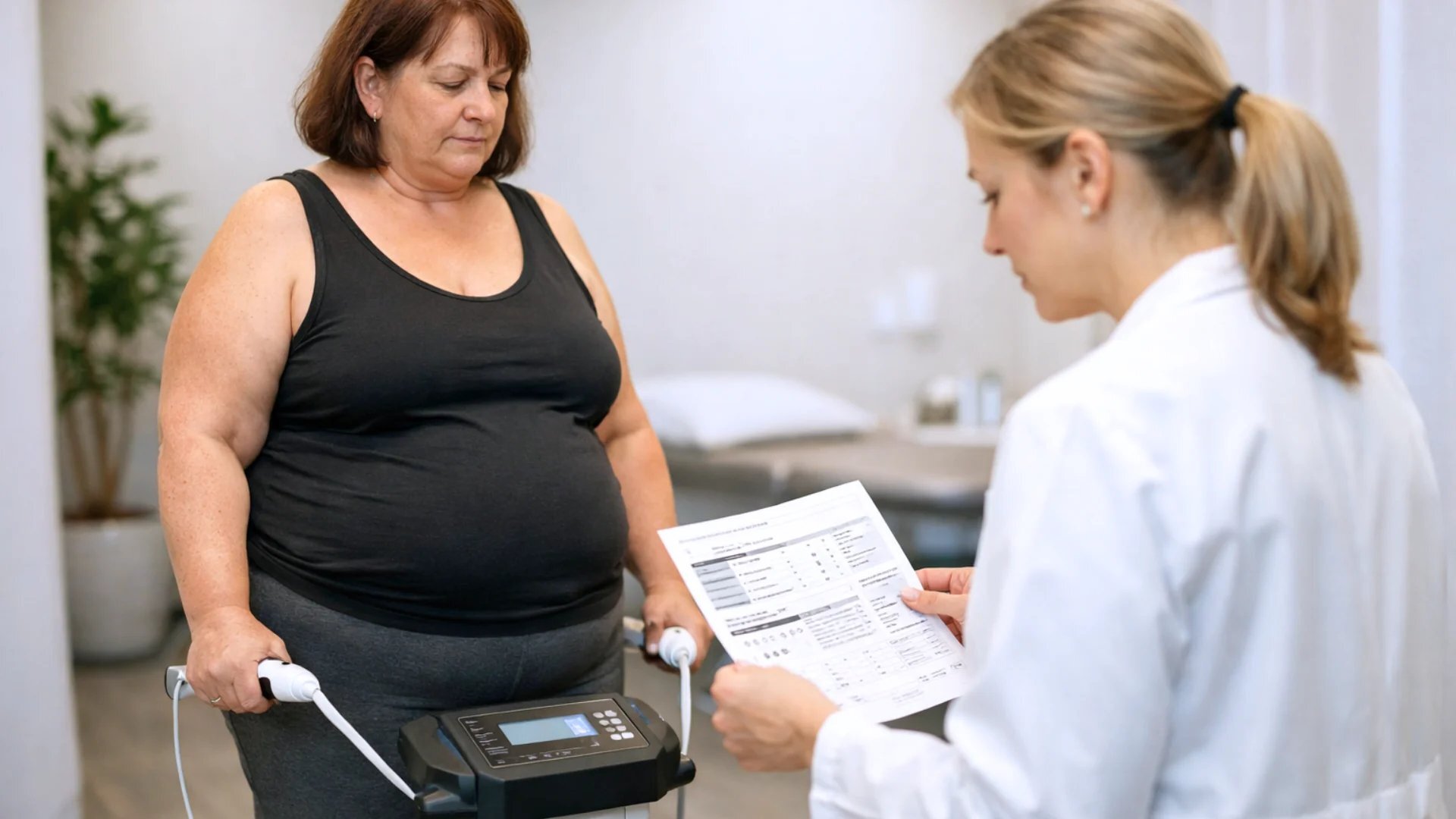
A medical weight loss evaluation includes a comprehensive health history review, physical examination, diagnostic lab work, a medication review, and a detailed conversation about your weight loss history, goals, and the obstacles that have prevented success in the past.
The evaluation follows a structured clinical process designed to determine both your eligibility for treatment and the specific approach that will work best for your body. Here is what the typical first visit covers:
- Health history review, including current medical conditions, past surgeries, family history of obesity and metabolic disease, and a detailed account of every previous weight loss attempt and what happened.
- Physical examination, including height, weight, BMI calculation, blood pressure, heart rate, and waist circumference measurement.
- Diagnostic lab work, typically including fasting blood glucose, HbA1c, thyroid function (TSH), comprehensive metabolic panel, lipid panel, and fasting insulin. These labs identify underlying conditions like hypothyroidism, insulin resistance, and dyslipidemia that may be driving weight gain.
- Medication review to identify any current prescriptions that contribute to weight gain. Common culprits include certain antidepressants, antipsychotics, corticosteroids, beta-blockers, and insulin. Your provider may recommend alternatives that achieve the same therapeutic goal without the weight gain side effect.
- Goal setting and plan development based on your clinical data, your personal goals, and the treatment options that fit your eligibility profile. This may include lifestyle modifications, prescription medication, or a combination approach.
The evaluation is a medical weight loss consultation, not a sales pitch. The goal is to determine whether treatment is appropriate, what type of treatment fits your body, and what realistic results look like for your starting point. We offer a free weight loss consultation to make this first step accessible.
How Do You Get Approved for Weight Loss Medication?
You get approved for weight loss medication by meeting the BMI eligibility criteria (30+ or 27+ with a comorbidity), completing a medical evaluation with a licensed provider, and, if using insurance, satisfying your insurer's prior authorization requirements.
The medical approval and the insurance approval are two separate processes. Medical approval happens at your evaluation appointment. Your provider reviews your BMI, health history, lab results, and contraindications. If you meet the clinical criteria and have no disqualifying conditions, you are medically eligible for a prescription.
Insurance approval is a different process entirely. Most commercial insurers require prior authorization for GLP-1 weight loss medications. The prior authorization typically requires documented evidence of BMI (from the provider's visit notes), documentation of at least one qualifying comorbidity, and in some cases evidence that the patient has attempted lifestyle modifications for a specified period (often three to six months) before the insurer will approve medication coverage.
If your insurance denies the initial request, your provider can appeal with additional clinical documentation. Many initial denials are overturned on appeal when the provider submits detailed lab results, a letter of medical necessity, and documentation of prior weight loss attempts. Setting realistic weight loss goals with your provider early in the process helps build the clinical documentation that insurers require.
Medicare now covers GLP-1 medications for cardiovascular risk reduction in eligible patients, which represents a significant expansion of access for adults over 65. Medicaid coverage varies by state. Florida Medicaid has piloted weight management programs, though coverage for GLP-1 medications specifically depends on the managed care plan and the documented clinical indication.
For patients whose insurance does not cover weight loss medication at all, the self-pay pathway is often faster and more straightforward. Many patients choose to pay out of pocket for the first three to six months of treatment while their provider works through the insurance authorization process in parallel. This approach avoids delaying treatment while administrative paperwork moves through the system. The NIDDK identifies 5-10% body weight loss as clinically significant, and many patients reach this threshold within the first three to four months of treatment, producing health improvements that justify the investment regardless of insurance status.
Who Qualifies for Free or Reduced-Cost Weight Loss Programs?
Patients who qualify for free or reduced-cost weight loss programs include those with qualifying insurance coverage, patients eligible for manufacturer discount programs, and patients at practices that offer free initial consultations.
Manufacturer direct-to-consumer programs have significantly expanded access. Novo Nordisk offers Wegovy at $149 per month for eligible self-pay patients through its direct program. Eli Lilly offers similar pricing for Zepbound. These programs are available to patients who do not have insurance coverage for the medication or who prefer to bypass the prior authorization process.
Compounded versions of semaglutide and tirzepatide offer lower-cost alternatives for patients who do not qualify for insurance coverage or manufacturer programs. The median monthly cost for compounded semaglutide across telehealth providers is approximately $175, according to the Weight Loss Rankings 2026 pricing index. Our blog comparing peptides vs. Ozempic explains the differences between branded, compounded, and peptide-based weight loss options.
HSA and FSA funds are generally eligible for medical weight loss program fees, provider visits, lab work, and prescription medications. Using pre-tax dollars effectively reduces out-of-pocket costs by 20-30% depending on your tax bracket. Telehealth visits for weight loss follow-ups are also typically HSA/FSA eligible.
Do You Need a Referral for Medical Weight Loss?
No, you do not need a referral from another doctor to start a medical weight loss program in most cases. Primary care physicians, nurse practitioners, and physician assistants can all evaluate you for weight loss treatment and prescribe FDA-approved medications without a specialist referral. This is a significant change from older models that routed all obesity treatment through endocrinologists or bariatric specialists.
The Obesity Medicine Association confirms that primary care providers are increasingly the first point of contact for weight loss medication. A 2019 Medical Expenditure Panel Survey analysis found that more than 60% of psychotropic medications are prescribed by non-specialist providers, and the same trend applies to weight loss medications. Your weight loss shots and oral medications can be prescribed, monitored, and adjusted by the same provider who manages your other health conditions.
Some insurance plans may require a referral for specialist weight loss services or bariatric surgery, but the initial evaluation, lab work, and medication prescription typically fall within primary care or psychiatric nurse practitioner scope. Here in Hialeah, we evaluate and treat weight loss patients as part of our comprehensive care model, so no referral is needed to schedule your first appointment.
Frequently Asked Questions
What Lab Work Is Needed for a Medical Weight Loss Program?
The lab work needed for a medical weight loss program typically includes fasting blood glucose, HbA1c (blood sugar control), thyroid function (TSH), a comprehensive metabolic panel (kidney and liver function), a lipid panel (cholesterol and triglycerides), and fasting insulin (insulin resistance screening). These tests identify underlying conditions that contribute to weight gain, establish baseline values for monitoring progress, and determine whether prescription medications are safe for your individual physiology. Additional tests may be ordered based on your symptoms and health history.
Can Children Qualify for Medical Weight Loss Medication?
Yes, certain FDA-approved weight loss medications are available for children and adolescents. The NIDDK reports that the FDA has approved four weight management medications for children ages 12 and older: orlistat (Xenical), liraglutide (Saxenda), phentermine-topiramate (Qsymia), and semaglutide (Wegovy). A fifth medication, setmelanotide (Imcivree), is approved for children ages 6 and older with rare genetic disorders causing obesity. Pediatric eligibility requires a BMI at or above the 95th percentile for age and sex.
What If My BMI Is Below 27 But I Want to Lose Weight?
If your BMI is below 27, you generally do not qualify for prescription weight loss medication under current FDA guidelines. However, you may still benefit from a medically supervised lifestyle program that includes nutritional counseling, exercise guidance, behavioral modification, and metabolic monitoring. Your provider can evaluate whether underlying factors like thyroid dysfunction, insulin resistance, or medication side effects are contributing to your weight and address those conditions directly.
How Long Does It Take to Get Approved for Weight Loss Medication?
Medical approval can happen at your first evaluation visit if you meet the BMI and health criteria. Insurance prior authorization typically takes one to four weeks, depending on your insurer and the completeness of the clinical documentation submitted. If insurance denies coverage, the appeal process can add another two to four weeks. Self-pay and manufacturer discount programs bypass the insurance timeline entirely and can begin as soon as the prescription is written.
Does Medicare Cover Weight Loss Programs?
Medicare now covers GLP-1 medications for cardiovascular risk reduction in eligible patients, which is a significant recent expansion. Medicare also covers behavioral counseling for obesity (intensive behavioral therapy, or IBT) for beneficiaries with a BMI of 30 or higher. Coverage for weight loss medications specifically for weight management (as opposed to cardiovascular risk or diabetes) varies by plan and is evolving as obesity is increasingly recognized as a chronic disease requiring treatment.
Can You Qualify for Medical Weight Loss If You Have Already Tried Dieting?
Yes, and in many cases prior diet attempts actually strengthen your eligibility. Insurance companies often require documentation that the patient has attempted lifestyle modifications before approving weight loss medication. If you have tried and failed to lose weight through diet and exercise alone, that history demonstrates that your obesity requires medical intervention beyond behavioral changes. Bring a summary of your previous weight loss attempts to your evaluation appointment, including what you tried, how long you tried it, and what happened.
The Takeaway
Medical weight loss eligibility is based on clear, measurable clinical criteria. If your BMI is 30 or higher, you qualify. If your BMI is 27 or higher and you have a weight-related health condition, you qualify. The evaluation process is straightforward: a health history review, lab work, a physical exam, and a conversation about what has and has not worked in the past. From there, your provider builds a treatment plan specific to your body, your conditions, and your goals.
The CDC reports that obesity-related healthcare costs Americans $173 billion annually, and annual medical costs for adults with obesity are $1,861 higher per person than for adults at a healthy weight. Treating the weight is less expensive and more effective than treating the conditions it causes. A 2024 Emory University study found that even a 5% reduction in body weight saves approximately $670 per year in healthcare costs, and a 25% reduction saves up to $5,442 annually. The return on investment from medical weight loss compounds over time as the health improvements reduce the need for medications, specialist visits, and hospitalizations related to obesity-driven conditions.
At South Florida Med Group, we offer a free weight loss consultation to help you determine whether you qualify and what your best options are. Call (786) 860-8844 or book an appointment to take the first step.
Our weight management programs are built around your body, your health data, and your goals.



.png)

.png)
